 086 15318950099
Leave Your Message
-
Contact Phone
-
 Contact Email
Global buyers are examining Glazed Fire Door systems with greater care. They are not choosing glass and frames by appearance alone. A reliable assembly must control flames, smoke, heat, impact, and daily traffic. It must also match the wall rating, hardware package, glazing method, and installation conditions.
Lori Greene, an experienced fire-door consultant, states, “A fire door assembly is only as good as its weakest component.” This principle matters when comparing timber, steel, and composite Glazed Fire Door types. A steel-framed unit may suit busy hospitals, airports, and industrial corridors. A timber-framed design can provide warmth in hotels, offices, and residential developments. Ceramic glazing may offer stronger fire performance, while wired or specialist safety glass can meet different project needs. The correct choice depends on tested assembly performance, not glass size alone.
Small details often decide success. Check the label. Check the seals. Check the closer. Confirm whether the supplier provides compatible glazing beads, hinges, locks, and installation guidance. International buyers should also review test evidence, product traceability, factory quality controls, and local certification expectations. Requirements differ between markets, and one certificate may not satisfy every project.
There is no perfect type.
A visually elegant door can fail through poor installation. A highly rated product can disappoint when maintenance is ignored. This guide compares the leading Glazed Fire Door types for global buyers, focusing on fire performance, visibility, durability, design flexibility, compliance evidence, and practical lifecycle value.
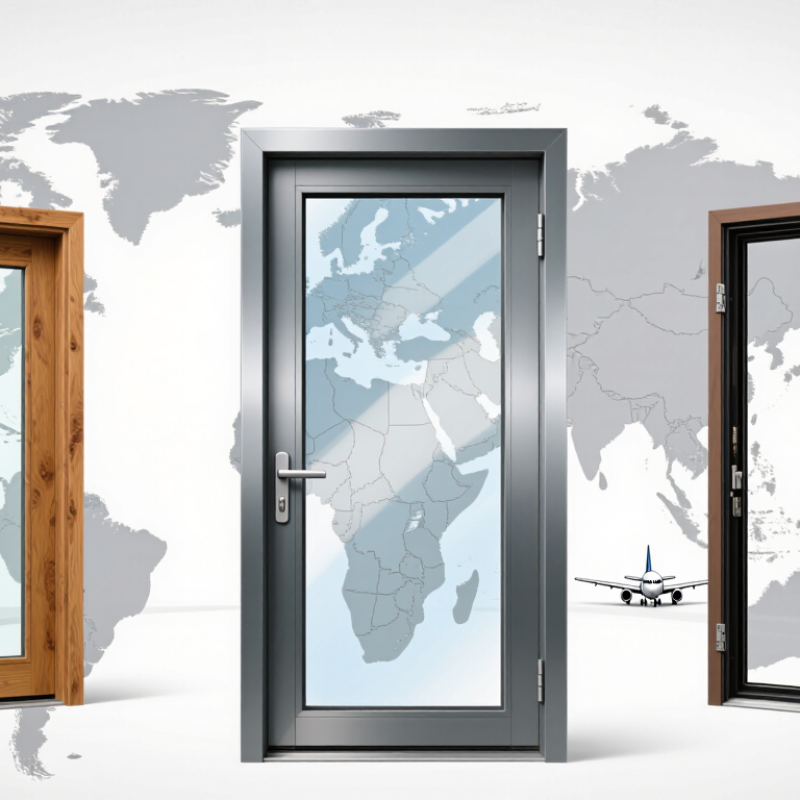
Glazed fire doors are not ordinary doors with decorative glass. Their glass must resist heat, smoke, and flame under tested conditions. Common options include wired glass, ceramic glass, and multilayer intumescent glass. Ceramic and intumescent systems can provide stronger insulation than basic wired glass. The correct choice depends on the required fire rating, opening size, and building use.
NFPA reported 1,504,500 fires and 3,790 civilian fire deaths in the United States during 2022. Smoke remains a serious threat before flames reach occupants. A certified glazed door limits smoke movement through sealed edges and expanding intumescent strips. Its glass can remain stable while nearby temperatures rise sharply. That protection is practical, not theoretical.
Testing matters more than appearance. EN 1634-1 and UL 10C assess fire-door performance, including integrity and, where specified, insulation. NIST fire research also shows that modern contents can create dangerous conditions quickly. A door may pass testing yet perform poorly after incorrect installation. That gap is uncomfortable. Buyers should verify the complete doorset, including glass, frame, hinges, seals, and closers. Site damage, loose seals, or unsuitable hardware can reduce protection. Even a small unsealed gap deserves attention.
| Glazed Fire Door Type | Typical Glass Construction | Common Certified Rating Range* | Protection Against Heat, Smoke, and Flames | Main Advantages | Typical Applications | Key Buyer Checks |
|---|---|---|---|---|---|---|
| Wired Fire-Rated Glass Doors | Glass containing a steel wire mesh that helps retain fragments after breakage. | Commonly available in tested door assemblies from approximately 20 to 90 minutes for integrity, depending on the system and standard. | Helps resist flame passage and hot gases. It generally provides limited insulation unless the complete door assembly is specifically tested for insulation. | Cost-effective, widely recognized, and suitable where basic fire visibility is required. | Utility areas, service corridors, stairwells, industrial buildings, and plant rooms. | Check impact-safety certification, mesh type, glazing bead design, and whether the required rating includes insulation or integrity only. |
| Ceramic Fire-Resistant Glass Doors | Specialized monolithic ceramic glass with low thermal expansion and strong resistance to thermal shock. | Frequently tested in door systems for approximately 30 to 120 minutes, depending on thickness, framing, and the applicable test standard. | Provides strong flame and hot-gas resistance. Some configurations also limit radiant heat, but the insulation classification must be verified separately. | High optical clarity, good thermal-shock performance, and suitability for larger viewing areas. | Commercial interiors, hospitals, schools, transport facilities, and high-traffic escape routes. | Confirm edge protection, impact classification, maximum pane size, and compatibility with the specified door frame. |
| Intumescent Laminated Fire Glass Doors | Multiple glass layers separated by transparent intumescent interlayers that expand and become opaque when heated. | Commonly tested from approximately 30 to 120 minutes, with the final rating determined by the complete door assembly. | The interlayer expands to help block flames, hot gases, and radiant heat; multi-layer designs can provide both integrity and insulation. | Good visibility before fire exposure, strong heat-control potential, and a wide range of architectural configurations. | Office buildings, healthcare facilities, hotels, retail areas, and glazed partitions connected to rated doors. | Verify the required E, EW, or EI classification, storage conditions, UV exposure limits, and approved glazing materials. |
| Gel-Filled Multi-Layer Glass Doors | Two or more glass panes containing a transparent or translucent fire-resistant gel between the layers. | Often tested in configurations ranging from approximately 30 to 120 minutes, subject to the door design and certification. | The gel absorbs and reduces heat transfer while the glazing layers help resist flames and smoke movement. | Can offer high insulation performance and comfortable surface temperatures on the non-fire side. | Hospitals, laboratories, data facilities, airports, museums, and areas requiring strong heat reduction. | Review weight, pane thickness, transport requirements, temperature limits, seal compatibility, and replacement procedures. |
| Fire-Rated Laminated Safety Glass Doors | Laminated glass with fire-resistant interlayers designed to hold fragments together and support fire performance. | Rating varies widely; tested products are commonly available from approximately 30 to 90 minutes, depending on the tested construction. | The interlayer helps retain broken glass and may contribute to smoke, flame, and heat resistance when part of a certified assembly. | Improved post-breakage integrity, acoustic benefits, and flexible design options. | Hotels, apartment buildings, schools, offices, and internal doors requiring safety glazing. | Do not assume ordinary laminated safety glass is fire-rated; request the exact fire-test evidence for the complete door set. |
| Insulated Double-Glazed Fire Doors | Two or more fire-resistant panes separated by a tested spacer or cavity system. | Typically used where tested systems require higher insulation performance; ratings commonly range from approximately 30 to 120 minutes. | The cavity and fire-resistant layers reduce heat transfer, while the glazing system limits flame and hot-gas passage. | Best suited to projects balancing visibility, daylight, and reduced heat transmission. | Atriums, healthcare buildings, glazed corridors, public buildings, and high-specification commercial projects. | Confirm total glass thickness, door weight, hardware capacity, condensation performance, and tested maximum dimensions. |