China Top 10 Wooden Fire Door Manufacturers
China’s wooden fire door industry combines large-scale manufacturing with increasingly precise fire-safety engineering. A reliable Wooden Fire Door is not judged by appearance alone. Its core performance depends on the door leaf, frame, intumescent seals, hinges, closer, glazing, and installation quality.
Lori Greene, AHC/CDC, a widely recognized fire-door consultant, writes, “A fire door is only as good as its installation and maintenance.” This principle shapes our review of China’s top 10 wooden fire door manufacturers. We examine their factory experience, testing records, material control, customization ability, and after-sales support. We also consider evidence connected with standards such as EN 1634-1, UL 10C, NFPA 80, and applicable Chinese requirements. Certifications matter. They are not the whole story.
Look closely at the details.
A strong manufacturer should provide traceable test reports, clear labeling, and installation instructions. Buyers should also inspect moisture-resistant timber, fire-rated glass options, seal placement, and hardware compatibility. A beautifully finished door can still fail when the gap is excessive or the closer is poorly adjusted. That uncomfortable point deserves attention. Some suppliers publish impressive claims but provide limited project evidence. Others have excellent production lines yet weak field service. Therefore, this guide does not treat company size as automatic proof of reliability. It compares practical performance, documented expertise, and customer experience. The final ranking may still require reflection, because regional standards, building types, and project budgets can change the best choice. A Wooden Fire Door protects people only when design, testing, installation, and maintenance work together.
What Defines a Wooden Fire Door Manufacturer in China
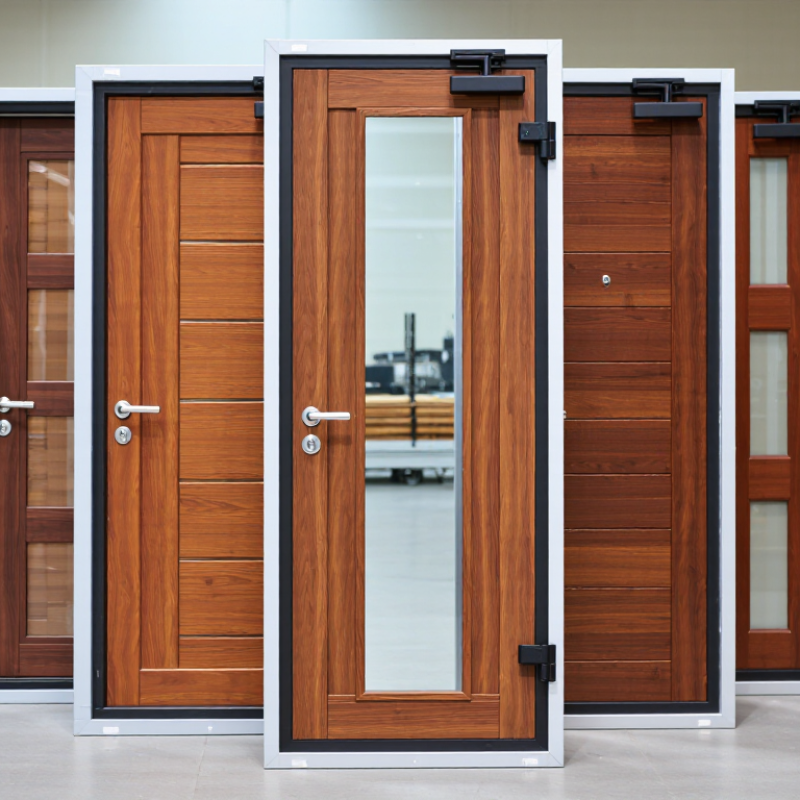
A wooden fire door manufacturer in China is defined by controlled performance, not attractive timber alone. The factory must select stable wood species, fire-resistant cores, certified adhesives, and compatible hardware. Each component affects smoke leakage, heat transfer, and door deformation.
China’s GB 12955-2008 standard requires fire-door testing, classification, and production control. Ratings commonly include 0.5, 1.0, and 1.5 hours, depending on the door type. A 2024 Fortune Business Insights report valued the global fire doors market at about USD 13.45 billion in 2023. This growth increases demand, but market size does not prove manufacturing quality. Buyers should inspect test reports, factory records, and sample consistency. A real manufacturer can explain its furnace testing process and provide traceable batch data. Factory visits often reveal more than polished catalogs. Some suppliers still rely too heavily on one successful sample.
Tips:
Check the complete door assembly, not only the leaf. Confirm the frame, hinges, closer, glazing, seals, and installation method match the tested design. Ask whether reports come from an accredited laboratory and whether production audits are current. Pay attention to moisture control, edge finishing, and warehouse conditions. Small gaps can become serious weaknesses during a fire test. An experienced Chinese manufacturer also offers installation guidance, inspection records, and corrective action when results are imperfect.
How China’s Top 10 Manufacturers Are Selected
China’s top 10 wooden fire door manufacturers are selected through a transparent, evidence-based process. The ranking does not rely on factory size or advertising claims. It examines production experience, testing records, technical teams, and delivery performance. Factory visits can reveal important details, including timber storage, moisture control, pressing equipment, and edge-sealing methods. These small details matter.
Each manufacturer should provide valid fire-resistance test reports from qualified laboratories. Reviewers check whether the tested door matches the supplied product, including core material, frame design, glass, hinges, and closer. Rated performance may include 30, 60, or 90 minutes, depending on the tested assembly. Compliance with applicable national, project, and export-market requirements is also examined. Paperwork alone is not enough.
Practical reliability receives equal attention. Evaluators compare sample quality, dimensional tolerance, surface finish, packaging, and replacement procedures. They may inspect several production batches rather than one prepared sample. Customer references and documented installation feedback add useful evidence. However, these sources are not always complete. A manufacturer can pass laboratory tests yet struggle with site coordination. That weakness should remain visible in the selection. Scores therefore consider technical capability, verified quality, service response, and the consistency of actual deliveries.
Profiles of China’s Top 10 Wooden Fire Door Manufacturers
China’s top ten wooden fire door manufacturers are best compared through verified capabilities, not catalogue claims. Grand View Research estimated the global fire door market at about USD 12.49 billion in 2023. Its forecast also indicates continued growth through 2030. This demand rewards factories with stable testing records, traceable materials, and dependable production control.
The ten profiles typically represent different strengths. One focuses on certified apartment doors. Another supplies hospitals and hotels with strict smoke-control requirements. Several specialize in export orders, custom sizes, or acoustic performance. The stronger manufacturers use fire-rated cores, moisture-resistant timber, controlled adhesives, and tested hardware sets. Their doors should meet China’s GB 12955 requirements, while export projects may require EN 1634-1 or equivalent testing. Factory audits should examine kiln records, glue application, density checks, and edge sealing. I would not treat a thick door as proof of safety.
Details matter.
NFPA reported 1,388,500 fires in the United States during 2023, with property damage reaching approximately USD 21.9 billion. The figure is not a direct measure of China’s market, but it shows why passive fire protection deserves careful evaluation. A reliable profile should identify test scope, fire-resistance duration, hardware compatibility, and production capacity. It should also disclose weaknesses, including limited customization or inconsistent surface finishing. Rankings can change after new tests, inspections, or major project feedback. That uncertainty deserves honest attention.
Fire Ratings, Testing Standards, and Certifications
China Top 10 Wooden Fire Door Manufacturers: Fire Ratings, Testing Standards, and Certifications
When comparing China’s top wooden fire door manufacturers, verify the tested assembly, not only the advertised rating. A 60-minute door may include a specific leaf, frame, glass panel, seal, and hardware set. Changing one component can reduce performance.
Common references include China’s GB 12955 standard, EN 1634-1, UL 10C, and NFPA 252. These methods assess fire exposure, integrity, insulation, and sometimes hose-stream resistance. Ratings are not automatically interchangeable between standards.
Ask for complete test reports from accredited laboratories, including specimen size and installation conditions.
Look closely at intumescent seals around the frame and the door’s edge. During testing, these materials expand and close gaps as temperatures rise. Quality manufacturers should provide batch records, production controls, and traceability for cores, veneers, glass, and hardware. Certification marks alone are insufficient. Their scope must match the exact model and rating.
Site experience still matters. Uneven floors, oversized clearances, or unapproved closers can weaken a certified assembly. I have seen specifications focus heavily on the door leaf while ignoring the frame and hinges. That is a costly blind spot.
Request installation instructions, maintenance schedules, and evidence of repeat production testing. A reliable supplier should also explain what the certification does not cover. Test evidence can be strong, yet field performance may still depend on careful installation.
How to Compare Suppliers and Choose the Right Manufacturer
Comparing China’s top 10 wooden fire door manufacturers requires more than reviewing attractive catalogs. Check certification scope, test dates, fire ratings, and the exact door construction behind each claim. A reliable supplier should explain its timber core, veneer, frame material, glass, hinges, and smoke seals clearly. Ask for a complete technical data sheet.
Request a production sample before placing a large order. Measure the leaf thickness, frame joints, surface finish, and hardware alignment. A practical factory audit can reveal storage conditions, moisture control, assembly lines, and final inspection procedures. Photos help, but they are not enough. Ask how many doors each batch contains and how defects are recorded. Small details matter.
Pricing also needs careful comparison. A low quotation may exclude packaging, testing, installation guidance, or replacement parts. Confirm lead times, minimum order quantities, payment stages, and after-sales support in writing. Language gaps can create expensive mistakes. Use drawings with dimensions and approved materials. A polished presentation can still hide weak process control. I have learned that supplier rankings are only a starting point, not proof of suitability. The best choice depends on your building type, project schedule, local approval requirements, and expected service conditions. Keep a comparison table, score evidence rather than promises, and revisit your decision when new test information appears.
China Top 10 Wooden Fire Door Manufacturers: How to Compare Suppliers and Choose the Right Manufacturer
Suggested procurement weighting for comparing wooden fire door suppliers. The percentages reflect common evaluation priorities, with safety compliance and product performance receiving the highest weighting.
How to use this chart: Score each manufacturer against these criteria, multiply each score by the corresponding weight, and compare the total result. Always verify fire-test reports, certification validity, door construction, project references, lead time, and after-sales support before placing an order.

 086 15318950099
 Contact Email