China Top Wood Grain Fire Door Features Benefits and Applications?
In recent years, the demand for Wood Grain Fire Doors has surged in the construction industry. According to a report by Allied Market Research, the global fire door market is projected to reach $4.85 billion by 2027, driven by increasing safety regulations. Wood Grain Fire Doors combine aesthetics with safety, making them popular in residential and commercial buildings.
These doors are designed to withstand high temperatures and resist fire for a specified duration. They offer a unique blend of elegance with their wood-like appearance while meeting required safety standards. Studies show that fire doors can prevent the spread of fire and smoke, making their application critical in fire safety protocols.
However, the balance between aesthetics and functionality continues to pose challenges. Not all Wood Grain Fire Doors are created equal. Understanding the materials and manufacturing processes is essential for achieving safety and durability. As trends evolve, the industry faces a commitment to innovation while ensuring reliability and compliance with safety standards.

Top Characteristics of China’s Wood Grain Fire Doors
Wood grain fire doors have gained popularity for their aesthetic appeal and functional benefits. These doors blend the warmth of natural wood with fire-resistant capabilities, making them a favored choice in various settings. They often include advanced technologies that enhance both safety and design flexibility. Their unique textures and finishes can complement architectural styles without sacrificing performance.
One key characteristic of China’s wood grain fire doors is their composite structure. This usually involves a core material designed to withstand high temperatures while maintaining structural integrity. The exterior veneer is often crafted to mimic real wood, which can enhance the door’s visual impact. Additionally, these doors are rigorously tested to meet safety standards, ensuring reliable fire resistance. However, there can be variability in quality across manufacturers, which necessitates careful consideration during selection.
In practice, these doors find applications in commercial buildings, schools, and residential spaces. Their ability to combine functionality and style serves as a significant advantage. Nevertheless, potential buyers should evaluate different options critically. Consideration of long-term durability and maintenance is crucial. Researching specific product lines may reveal inconsistencies. Exploring firsthand reviews can be valuable, but the market can be overwhelming. Choose wisely to ensure you strike the right balance between safety and aesthetics.
Characteristics and Benefits of China’s Wood Grain Fire Doors
Advantages of Using Wood Grain Fire Doors in Construction
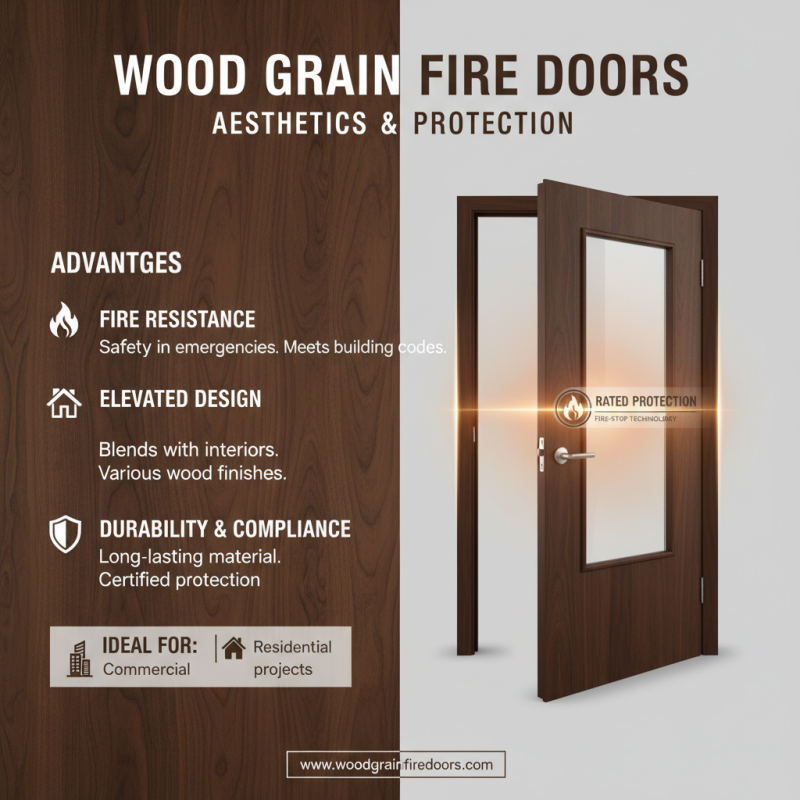
Wood grain fire doors offer a combination of aesthetics and functionality. These doors are designed to withstand fire for a specific duration, providing crucial safety during emergencies. Their wooden appearance allows them to blend in with various interior designs while meeting building codes. This duality is why many architects and builders opt for them in commercial and residential projects.
One significant advantage of wood grain fire doors is their thermal insulation properties. They help maintain temperature control in buildings, promoting energy efficiency. Additionally, they are customizable, allowing for different finishes and textures. This adaptability ensures that safety does not compromise style.
Tips: When selecting wood grain fire doors, consider the required fire rating and design. Ensure the doors meet local safety regulations. Regular maintenance is essential to check for wear and tear, which can compromise safety features. Always consult with professionals to assess your needs thoroughly.
Comparative Analysis: Wood Grain Fire Doors vs. Other Fire Door Types
When comparing wood grain fire doors to other fire door types, several factors come into play. Wood grain fire doors offer aesthetic appeal that metal doors often lack. Their design can seamlessly blend into interior spaces, providing a warm and inviting atmosphere while ensuring safety. A key benefit is their insulation properties. They often provide better thermal insulation compared to steel doors, which can enhance energy efficiency.
On the other hand, steel fire doors are often favored for their durability and strength. They typically offer a higher fire rating than wood grain options. However, steel doors can be cold and uninviting. In public spaces, this might affect the overall ambiance. Additionally, installation and maintenance can pose challenges. Wood grain doors may require more upkeep to maintain appearance, while steel doors can be prone to dents and corrosion over time.
Ultimately, the choice depends on the intended application and environment. Wood grain fire doors may excel in residential or commercial settings where aesthetics are key. Conversely, steel doors might be better suited for industrial applications where security and fire resistance take precedence. Balancing safety with design needs can be complex, and this decision warrants careful consideration.
China Top Wood Grain Fire Door Features Benefits and Applications
| Feature |
Wood Grain Fire Doors |
Steel Fire Doors |
Fiberglass Fire Doors |
| Aesthetic Appeal |
High-quality wood finish |
Less decorative options |
Generally plain appearance |
| Fire Rating |
Up to 90 minutes |
Up to 3 hours |
Up to 90 minutes |
| Weight |
Moderate |
Heavy |
Lightweight |
| Insulation |
Good thermal insulation |
Moderate insulation |
Excellent insulation |
| Cost |
Moderate |
High |
Low to moderate |
| Applications |
Commercial and residential buildings |
Industrial and high-security areas |
Light-duty applications |
Maintenance and Durability of Wood Grain Fire Doors in Different Environments
Wood grain fire doors are an excellent combination of aesthetics and safety. Their maintenance varies significantly by environment. In humid climates, wood can swell, requiring regular inspections and adjustments. Dry conditions may lead to cracking, demanding proactive measures.
Routine checks for seals and hardware are crucial. Applying sealants can preserve the door’s integrity and appearance. However, this process can be time-consuming. Replacing components that show wear is often overlooked. Reflecting on these aspects can improve durability in your building.
Fire doors must comply with safety standards, yet improper maintenance can compromise effectiveness. Frequent cleaning with suitable products prevents degradation. Unaddressed wear can lead to more significant issues. Have you evaluated your fire doors recently? Keeping track of environmental impacts ensures optimal performance.

 086 15318950099
 Contact Email