086 15318950099


As global construction projects become more demanding, buyers need more than attractive fire-rated doors. They need dependable evidence, consistent production, and practical export support. The search for the 2026 Best Professional Fire Door Factory for Global Buyers? should begin with performance, not marketing language. A reliable supplier should explain its testing process, material choices, quality controls, and installation requirements clearly.
A Professional Fire Door Factory should offer doors built for real project conditions. Look for steel or timber leaves, mineral cores, tested hinges, certified closers, and correctly fitted smoke seals. Small details matter. A two-millimeter gap can affect performance. Uneven frames can create installation problems. Factory experience should include documented inspections, batch traceability, moisture protection, and careful packaging for long-distance shipping. Buyers should also request current test reports from recognized laboratories and confirm their suitability for the destination market.
No factory is perfect. That matters. Some suppliers have strong engineering but slower communication. Others offer competitive pricing but limited customization. A serious evaluation should compare lead times, sample approval, after-sales support, and replacement-part availability. Site conditions may also expose weaknesses that factory brochures never mention. Experienced manufacturers should welcome technical questions and admit where their products have limitations. This article examines the qualities that distinguish dependable fire door manufacturers in 2026, helping architects, distributors, contractors, and importers make decisions based on verifiable performance rather than confident promises. Safety deserves evidence.
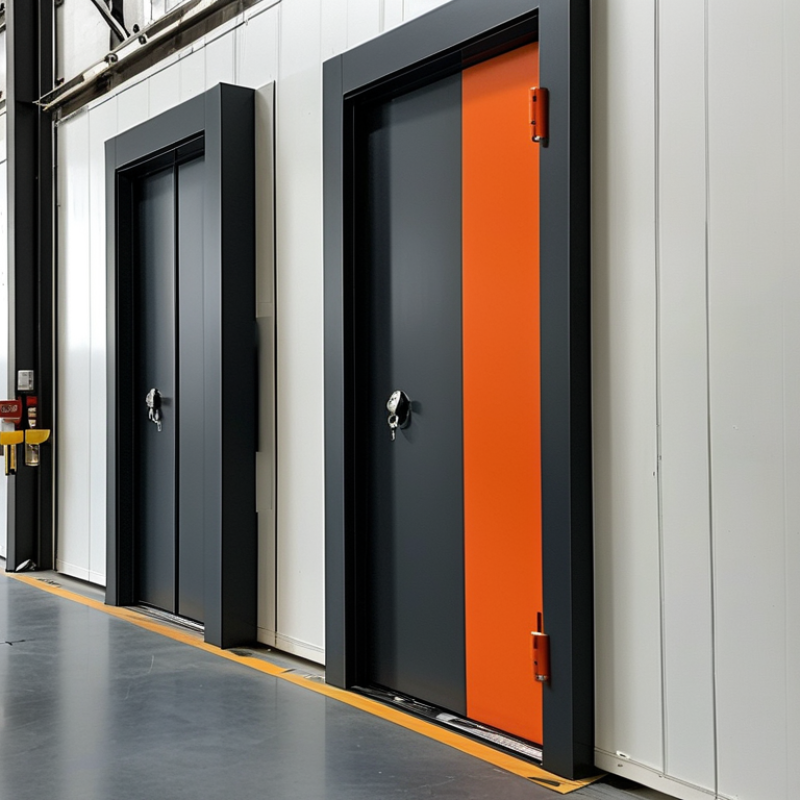
A professional fire door factory in 2026 is not merely a metalworking site. It is a controlled safety system. Each door should have verified ratings, tested hardware, documented materials, and traceable production records.
NFPA reported about 1.5 million fires attended by U.S. fire departments in 2023. That figure reinforces one point: small manufacturing errors can create serious consequences.
Professional factories test complete door assemblies, not only individual panels. They check leaf, frame, hinges, closer, glazing, seals, and latching together.
Relevant evidence may include fire-resistance testing under NFPA 252, ASTM E119, or EN 1634-1, depending on the target market.
Quality teams should also monitor steel thickness, weld consistency, coating adhesion, and batch identification. ISO 9001-style process control helps, but certificates alone prove little. Factory records and recent test reports matter more.
Tips:
Ask for the exact test scope. Confirm the tested size, hardware, wall type, and rating. Request production photos and inspection records. Check installation guidance before ordering. A reliable supplier explains limitations clearly. It should also admit uncertainty when a project needs further engineering review. Perfect factories do not exist. Continuous correction does.

For global buyers, a professional fire door factory must prove performance through recognized testing, not attractive brochures. EN 1634-1 evaluates fire resistance for door assemblies, while EN 13501-2 defines classifications such as E, EW, and EI. These ratings describe integrity, radiation control, and insulation. North American projects often reference NFPA 80 and positive-pressure fire testing. ISO 3008 also supports international fire-resistance evaluation.
The numbers show why this discipline matters. NFPA’s Fire Loss in the United States During 2023 reported about 1.50 million fires and 3,790 civilian fire deaths. Property damage reached approximately 22.2 billion dollars. A factory should therefore provide accredited laboratory reports, batch traceability, calibrated equipment, and documented production controls. Inspect the hinge side, latch, glazing, and intumescent seals. Small gaps can become serious weaknesses.
A certificate alone is not enough. Factory audits should compare tested designs with actual production. Check steel thickness, core density, hardware compatibility, and installation instructions. These details often decide field performance. One test sample never represents every installation. That limitation deserves honest discussion. Factories should also explain certificate scope, test duration, door size limits, and permitted hardware. Some suppliers present a 90-minute result as universal. It is not. A reliable manufacturer connects each specification to a valid report, an applicable standard, and a traceable production record.
A professional fire door factory should begin with materials, not marketing. NFPA’s Fire Loss in the United States During 2023 recorded 1,388,500 fires and approximately $22.3 billion in direct property damage. These figures make door performance a practical safety requirement. Steel doors offer strength and dimensional stability. Timber doors provide warmth but require controlled moisture content. Fire-rated glass improves visibility when its tested system includes the correct frame, seals, and glazing beads. The core matters too. Mineral wool and calcium-silicate boards can reduce heat transfer when correctly installed.
Design must match the building’s risk and daily use. A hospital corridor needs reliable closing, smooth operation, and clear observation. A warehouse may require stronger impact resistance and larger certified assemblies. NFPA 80 stresses inspection, maintenance, and proper installation. The complete assembly must be tested, not only the leaf. Ratings commonly include 20, 45, 60, 90, and 180 minutes, depending on project requirements. Small gaps can become serious weaknesses.
Manufacturing quality depends on repeatable controls. Cutting, core fitting, bonding, welding, coating, and hardware installation should follow documented procedures. Each door needs traceable batch records and inspection points. Independent testing under standards such as NFPA 252 or equivalent regional methods supports credible performance claims. Factory experience still matters. A perfectly tested design can fail through poor fitting on site. That uncomfortable detail deserves attention. Some factories also underestimate humidity, shipping damage, or inaccurate wall measurements. Buyers should review test reports, production samples, tolerance records, and installation guidance before approving large orders. And yes, even a strong factory can make mistakes. Metrics must prove otherwise.
A professional fire door factory should show quality control at every production stage. Steel sheets need thickness checks before cutting. Core materials require density and moisture verification. Door frames must be measured against approved drawings. Welding should leave clean, continuous joints without visible gaps. Experienced inspectors record each result, not just the final appearance. Production records should also support batch traceability. This helps buyers investigate defects quickly.
Tips: Ask for recent test reports, factory inspection records, and sample approval procedures. Confirm which standards apply in your destination market. Do not rely on photographs alone. A practical factory should explain its testing limits clearly.
Fire doors need more than attractive surfaces. A capable factory performs fire resistance tests through qualified laboratories. It should also check smoke leakage, hardware operation, door closing force, and repeated opening cycles. Production lines may include cutting, forming, welding, filling, coating, assembly, and final inspection. These processes need controlled work instructions. However, no factory is flawless. Small coating marks or measurement differences can still appear. The important question is how quickly the team detects, records, and corrects them. Buyers should review corrective action reports and inspect random finished doors. Large capacity means little without stable quality. Reliable suppliers welcome technical questions and provide evidence before accepting large orders.
Global buyers should evaluate a professional fire door factory through evidence, not attractive catalog images.
NFPA’s Fire Loss in the United States During 2023 reported 1,388,500 fires and approximately 22.3 billion dollars in direct property damage.
This figure makes traceable fire resistance essential. Request current test reports, certification scope, production photos, and batch records.
Check whether the tested door matches the quoted model, glazing, hardware, frame, and wall type. A 90-minute door is not automatically compliant everywhere.
Factory audits should examine steel thickness, core density, welding quality, hinge reinforcement, closer installation, and gasket performance.
Ask for sample doors before signing a large order. Measure leaf gaps with a feeler gauge. Open the door repeatedly and inspect closing speed.
Small details matter. Standards differ between markets, including EN 1634-1, NFPA 252, and ISO 3008.
Confirm requirements with the local authority or project consultant.
Order documents should define dimensions, finish, hardware, fire rating, packaging, inspection rights, spare parts, and replacement responsibilities.
UNCTAD’s Review of Maritime Transport 2024 notes that shipping carries over 80% of global merchandise trade by volume, so delivery planning deserves equal attention.
Confirm Incoterms, port handling, moisture protection, and lead time in writing.
A low quotation may exclude testing, pallets, or customs documents. This is easy to miss.
I still believe supplier evaluation can be too document-focused; a factory may present perfect paperwork while production control remains weak. A pre-shipment inspection is useful, but it cannot replace consistent factory quality.