inquiry
Leave Your Message

10 Tips for Choosing the Right Powder Coated Fire Door for Your Needs

Choosing the right Powder Coated Fire Door is crucial for any building. It not only enhances safety but also contributes significantly to aesthetics and durability. According to industry reports, fire doors prevent the spread of fire and smoke, saving lives and property. The National Fire Protection Association states that an effective fire door can restrict the spread for at least 30 minutes. This emphasizes the importance of selecting doors that meet specific fire safety standards.

When considering a Powder Coated Fire Door, factors like materials, ratings, and environmental conditions come into play. The coating enhances corrosion resistance, ensuring longevity in various settings. However, not all powder coatings are created equal; some may degrade over time, losing their protective qualities.

It’s essential to weigh these factors against your specific needs and building requirements. Many may overlook the significance of proper fire door installation and maintenance. Even a top-quality door can fail without proper care. Therefore, understanding both the product and the environment is vital for making informed choices in fire door selection.

10 Tips for Choosing the Right Powder Coated Fire Door for Your Needs

Understanding the Importance of Fire Doors in Safety Applications

Fire doors play a crucial role in enhancing safety within buildings. According to a report by the National Fire Protection Association (NFPA), nearly 3,000 lives were lost due to fire-related incidents in the United States alone in 2020. Fire doors act as barriers, containing flames and smoke, allowing for safer evacuations. However, not all fire doors are created equal. Choosing the right one requires careful consideration of various factors.

The construction materials significantly influence a fire door's effectiveness. Steel doors, for instance, offer greater durability and protection than wood doors. The NFPA recommends that fire doors should have a fire-resistance rating appropriate for the building type. Many fire doors are rated for 20 minutes to three hours. Installing a door with a lower rating than required can be dangerous. Furthermore, the importance of proper installation cannot be overlooked; even the highest-rated door fails to protect if not installed correctly.

Regular inspections and maintenance of fire doors are vital. In a recent survey, 70% of property managers reported challenges in maintaining fire safety equipment. This raises questions about compliance and effectiveness. Fire doors must be checked for damage, functionality, and proper sealing. Neglecting them can lead to increased risks. Awareness of these factors is critical in ensuring the safety of occupants, making informed choices imperative.
Key Features to Look for in Powder Coated Fire Doors

10 Tips for Choosing the Right Powder Coated Fire Door for Your Needs

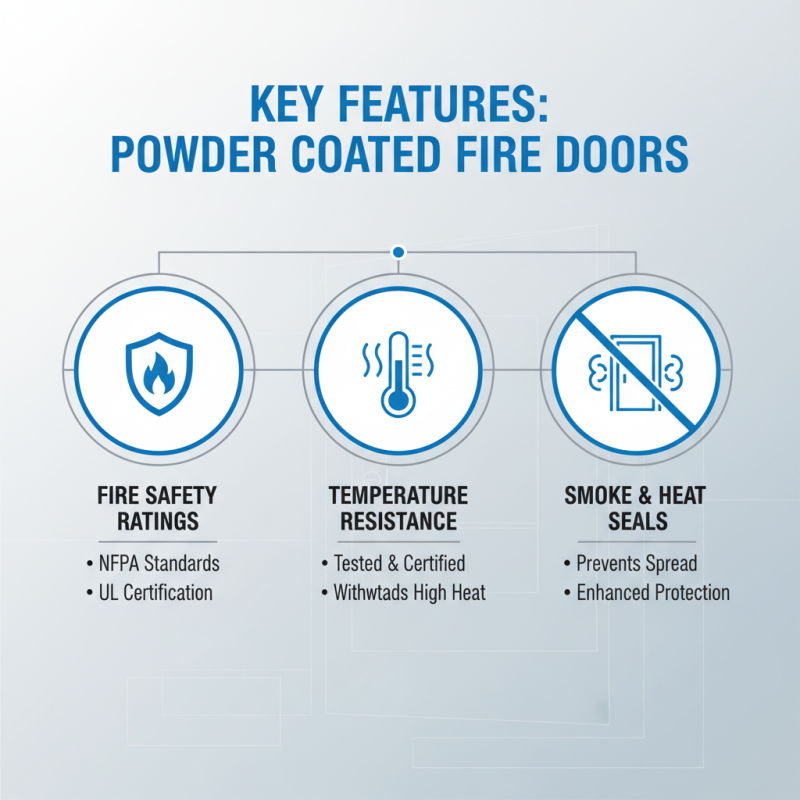
When selecting a powder coated fire door, consider key features that enhance safety and performance. Look for doors that meet fire safety ratings like NFPA or UL standards. Testing and certifications ensure that the door can withstand high temperatures. Choose doors with proper seals that prevent smoke and heat from spreading.

Durability is crucial for long-term use. Powder coated finishes should resist chipping and fading over time. Inspect the thickness of the door; a robust construction helps in providing better protection. Additionally, consider the insulation properties. A well-insulated door not only meets safety standards but also improves energy efficiency.

Aesthetics can be just as important. Powder coated doors come in various colors and finishes. This allows blending with building designs while maintaining safety. Visual appeal shouldn't compromise function. Reflect on the environmental impact as well. Choosing eco-friendly materials and finishes can lead to a more sustainable choice.

Evaluating Fire Ratings and Compliance Standards for Your Needs

When selecting a powder-coated fire door, understanding fire ratings and compliance standards is essential. Fire ratings indicate how long a door can withstand fire. They typically range from 20 minutes to 3 hours. Choosing a door with the appropriate rating for your building's specific needs is crucial.

Consider the specific requirements of local building codes. Many regions mandate compliance with standards such as NFPA and ANSI. These codes are designed to ensure safety and reduce risks during emergencies. Inadequate compliance can lead to severe consequences, including increased liability and safety hazards.

Moreover, evaluate the installation process. A poorly fitted door may compromise its fire resistance. It is essential to work with a qualified professional who understands fire door regulations. Many property owners overlook this, thinking that a standard installation will suffice. Real-world experience teaches us that proper installation makes a significant difference in performance.

Fire Door Ratings and Compliance Standards

Assessing Durability and Maintenance Requirements of Fire Doors

When selecting a powder-coated fire door, assessing durability is crucial. Fire doors face extreme conditions. They must resist heat, wear, and potential impact. Look for materials that can withstand high temperatures without warping. A well-chosen fire door can protect the structure effectively.

Maintenance requirements often go hand in hand with durability. Regular inspections are necessary to ensure the door operates properly. Check the seals to prevent smoke leakage. Some might find it challenging to keep track of maintenance schedules. Ignoring this aspect can lead to serious safety issues.

Consider the coatings used on the door. Some finishes are more resistant to scratches and corrosion. These can save you time and money in the long run. However, they might require special cleaning methods. Not all users are familiar with these methods, which may lead to damage if not followed properly. Careful research is essential in selecting the right door for your needs.

Choosing the Right Finish and Aesthetic for Your Environment

When selecting a powder coated fire door, aesthetics play a crucial role in harmonizing with your environment. Fire doors are not just safety features; they also contribute to the décor of a space. According to a recent industry report, around 70% of architects consider the visual appearance of fire doors in their designs. This is significant because a well-finished fire door can enhance the overall appeal of a building while fulfilling safety standards.

Color and finish are vital elements that should not be overlooked. Opting for neutral tones can create a seamless look in commercial spaces. However, vibrant colors can add personality in residential settings. The National Fire Protection Association (NFPA) suggests a focus on finishes that resist corrosion and wear, ensuring longevity. A finish tailored to withstand environmental factors can prevent fading and deterioration, which are common concerns.

Choosing the right powder coating is also about reflecting your brand or personal style. Some finishes imitate natural materials like wood or stone. This approach can be more aesthetically pleasing yet practical. However, it's essential to remember that safety and function must align with design. Sometimes, highly aesthetic options may compromise fire safety ratings, leading to difficult decisions. Thus, a balance between beauty and functionality is key.

10 Tips for Choosing the Right Powder Coated Fire Door for Your Needs

Tip Consideration Benefits
1. Assess Fire Rating Choose a door with an appropriate fire rating for your building requirements. Ensures adequate protection against fire hazards.
2. Evaluate Durability Select materials and coatings known for longevity and impact resistance. Reduces maintenance costs over time.
3. Consider Aesthetic Appeal Choose colors and finishes that complement the surrounding architecture. Enhances the overall aesthetic of the building.
4. Check Compliance Standards Ensure the door meets local building codes and regulations. Avoids legal issues and penalties.
5. Look for Customization Options Consider doors that can be customized in size and design. Provides the flexibility to fit specific needs.
6. Analyze Cost vs. Value Compare the initial price with the long-term value of the door. Ensures a wise investment for safety and aesthetics.
7. Research Manufacturers Examine different manufacturers for quality and reliability. Ensures you get a reliable product.
8. Check Warranty Options Look for doors that come with comprehensive warranties. Provides peace of mind for your investment.
9. Assess Installation Requirements Determine if specific paneling or framing is required for installation. Ensures proper fit and function.
10. Evaluate Maintenance Needs Consider the upkeep required to maintain the door's finish and function. Reduces long-term maintenance efforts.